

Malaysian employers should start reviewing their recruitment processes as new requirements under the Employment Insurance System Act 2017 (Act 800) introduce a formal obligation to notify PERKESO about certain job vacancies and newly created positions. The new provisions under Section 45F are scheduled to take effect on 2 January 2027.
Employers that fail to comply may face progressive fines, with the maximum reaching RM5,000 for a third or subsequent offence.
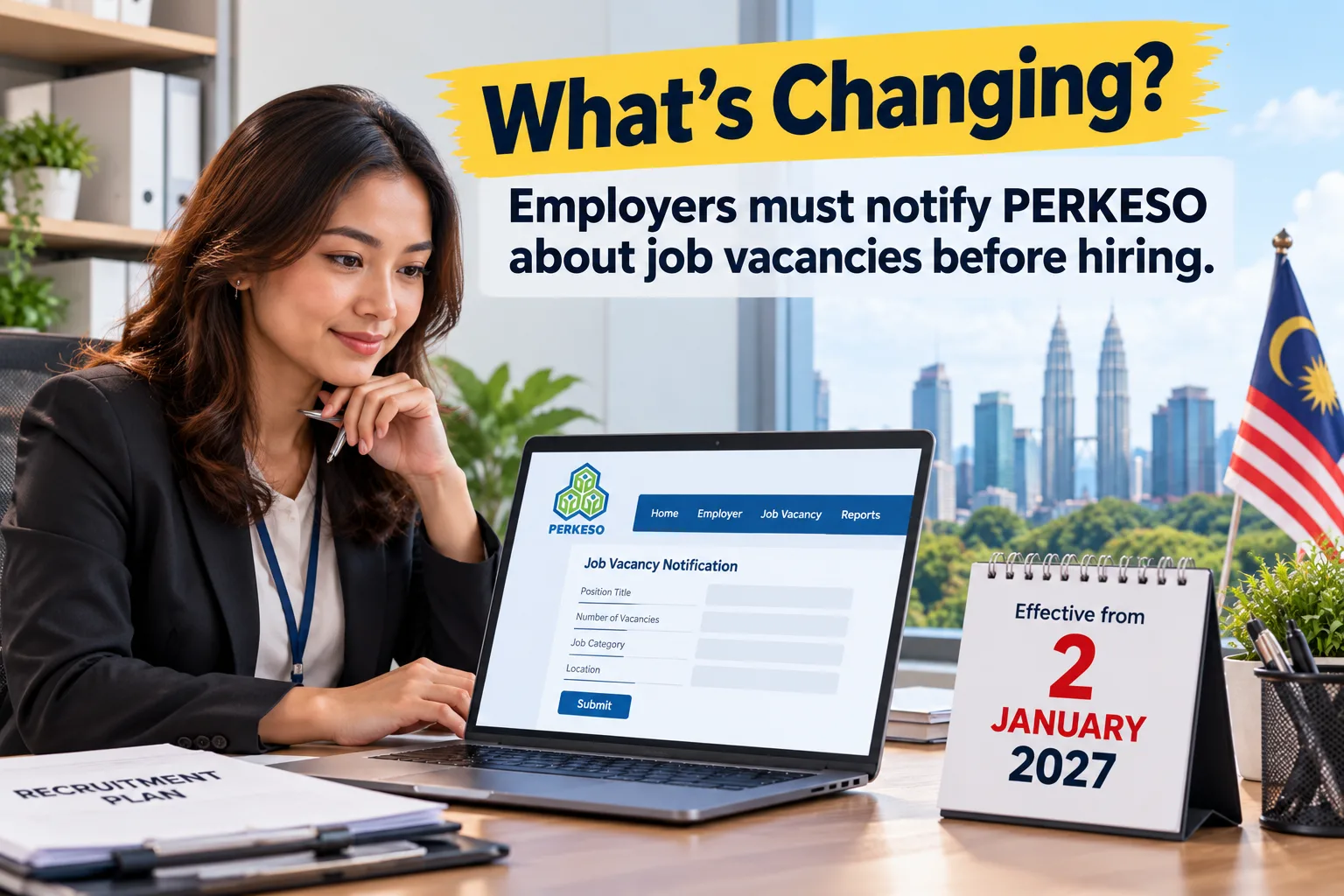
What Is Changing?
Under the new Section 45F(1), employers will be required to notify PERKESO in writing on any vacancy before hiring an employee to fill that position. Once the vacancy has been filled, the employer must also notify PERKESO within seven days.
Vacancy reporting is traditionally handled through PERKESO's national employment portal, MYFutureJobs. Look out for PERKESO’s final system-specific submission guidelines ahead of the January 2027 rollout.
The purpose of the new requirement is not simply enforcement. The government has explained that the measure is intended to improve Malaysia's employment-matching system, strengthen labour-market information and ensure that jobseekers have better visibility of available opportunities.
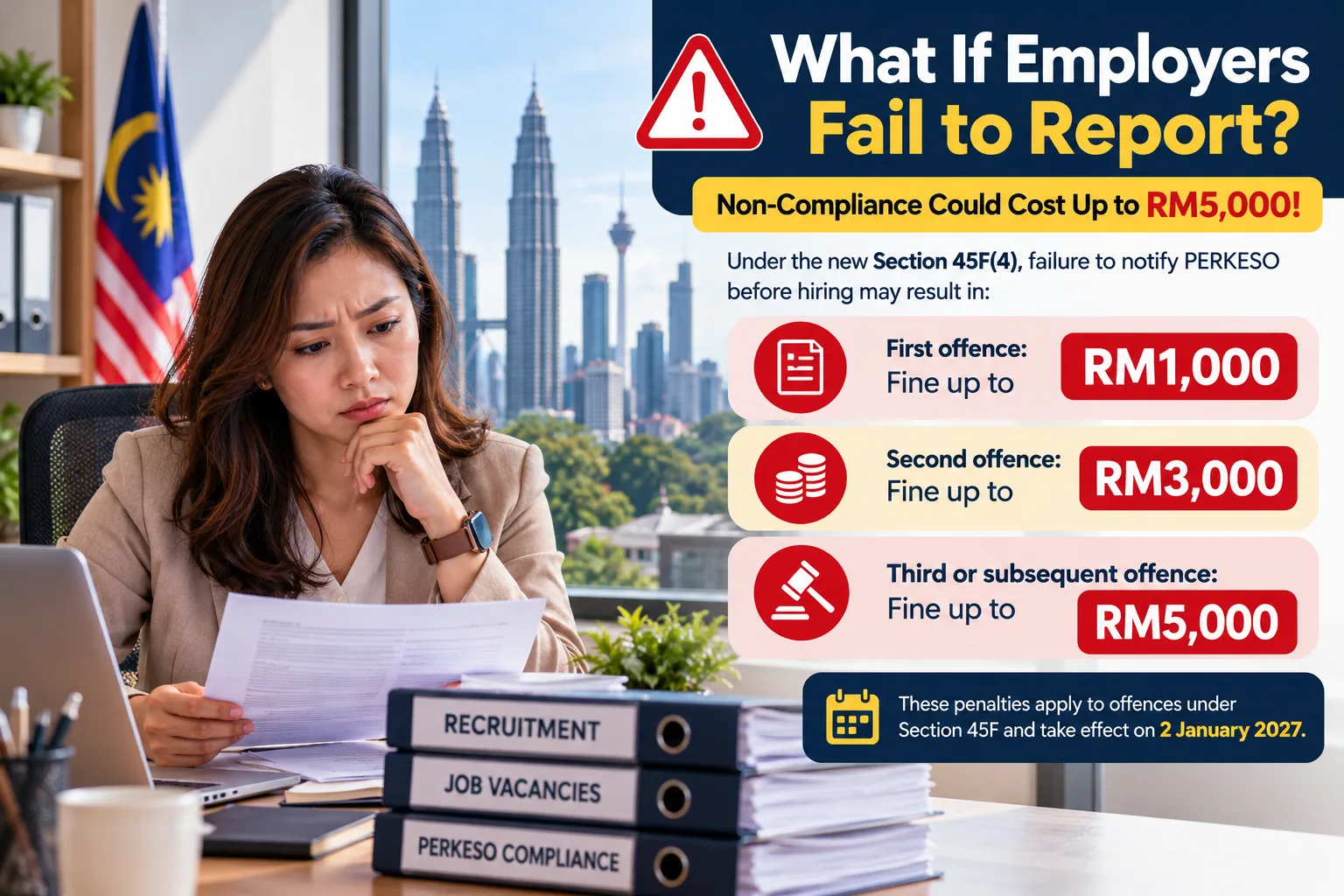
What Happens If an Employer Fails to Report?
The amended legislation introduces a progressive penalty structure.
These penalties relate specifically to a failure to comply with the vacancy-notification requirement under Section 45F(1). The progressive structure was introduced after concerns were raised that the original proposed penalty of up to RM10,000 could place a disproportionate burden on businesses, particularly SMEs.
The government has also indicated that the implementation approach will include education, engagement and opportunities for employers to rectify non-compliance before penalties are imposed.
Does This Mean Every Vacancy Must Be Reported?
Not necessarily.
This is an important area for employers to watch because the detailed implementation requirements and exemptions matter.
Current industry guidance on Section 45F indicates that certain categories of positions may be subject to reporting, while exemptions may apply to particular smaller employers, job categories and short-term positions. For example, current guidance identifies graduate positions and certain MASCO occupational groups as reportable categories, while some smaller employers and certain lower-level or short-term positions may fall within exemptions.
Therefore, employers should not simply assume that every vacancy is automatically subject to the same reporting requirement. HR departments should check the latest PERKESO guidance applicable to their organisation and the position being recruited.

What Should Employers Do Now?
The best approach is to prepare the recruitment process before the new requirements take effect.
|
Review your current recruitment process |
Map out what happens from the moment a department requests a new employee until the position is filled. Focus on :
|
|
Assign responsibility |
Don't leave PERKESO reporting as an informal HR task. Assign a specific person or team to manage. This creates accountability and reduces the risk of a vacancy being missed. |
|
Maintain proper records |
Employers should maintain a clear audit trail showing:
A simple recruitment compliance checklist can make this much easier. |
|
Review your MYFutureJobs process |
Employers should ensure that the HR team understands the applicable advertising and reporting procedures on MYFutureJobs before the new requirements take effect. A practical process could look like this:
|
The objective is to make reporting part of the normal recruitment workflow rather than treating it as a separate compliance exercise.
Why HR Departments Should Prepare Early
For companies that recruit regularly, the biggest challenge may not be the fine itself. It is the process discipline required to ensure that every reportable vacancy is captured and followed through correctly. A company may have several departments recruiting at the same time. Without a centralised process, it is easy for one vacancy to be overlooked.
This is why companies should consider building the requirement into their manpower requisition form, recruitment checklist and HR SOP before January 2027.
What About Internships?
Employers should also pay attention to internships. Current industry guidance indicates that positions related to industrial training may be exempt in certain circumstances, but employers are nevertheless strongly encouraged to report internship opportunities through MYFutureJobs.
For companies regularly hiring interns, it is therefore worth establishing a consistent process rather than deciding on reporting requirements on a case-by-case basis.

Key Takeaway for Employers
The new Section 45F requirements represent a move towards more structured vacancy reporting and employment matching in Malaysia.
The important date is:
2 January 2027
Employers should use the period before implementation to review their current recruitment SOP's and make changes while also monitoring further PERKESO guidance and implementation updates