
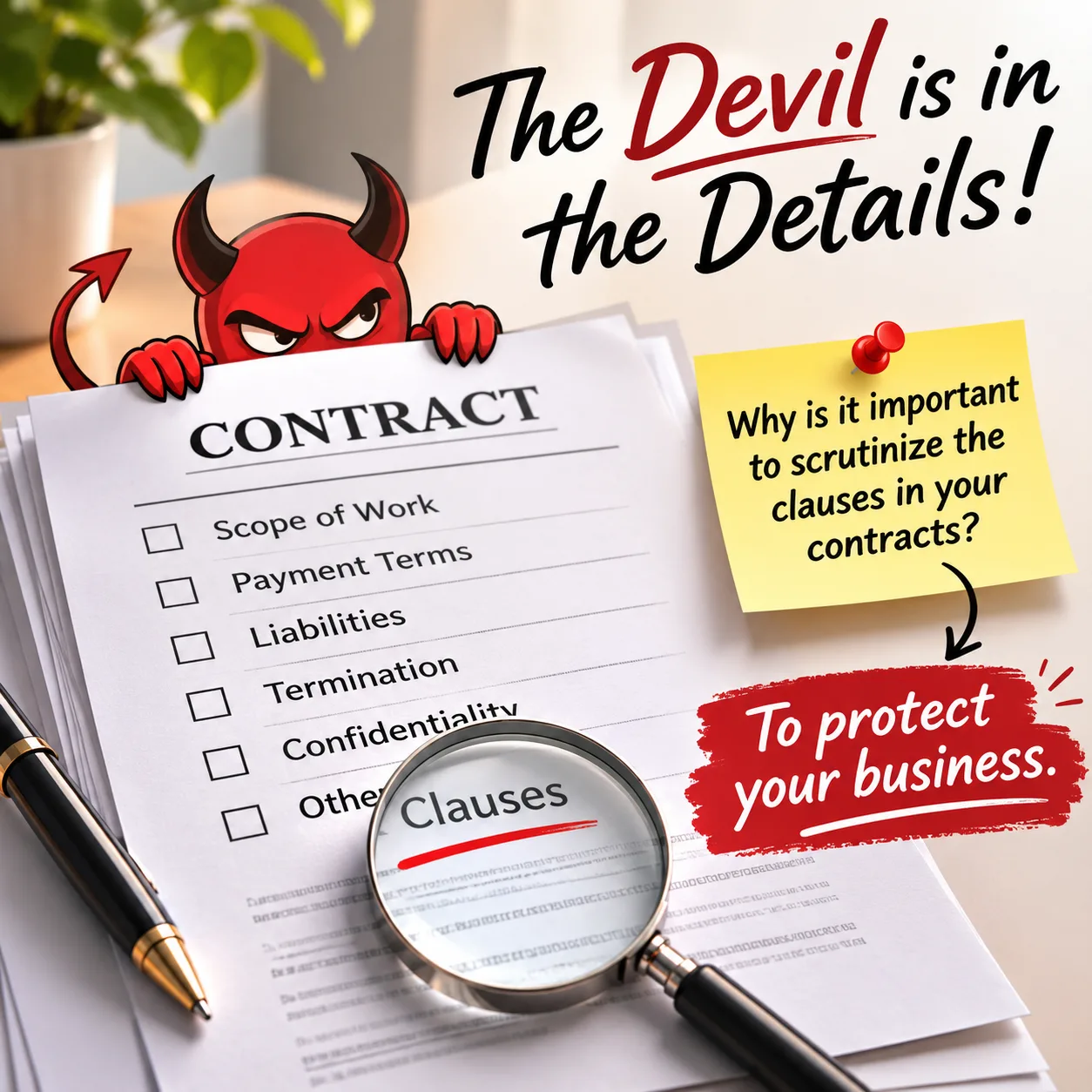
Why is it important to scrutinize the clauses in your contracts? To protect your business.
I would like to highlight an interesting Malaysian property dispute: SEAN-LEE (M) SDN BHD v MUHAMMAD NUR HISYAM CHE MAHMOOD [2025] CLJU 12. The dispute concerned a Sale and Purchase Agreement (SPA), where the seller sought to have the SPA declared void, forfeit payments received from the buyer and resell the property. The seller's application was dismissed with costs.

Two important contractual issues arose:
1. Validity of the SPA and forfeiture of payments
The dispute highlighted the distinction between a valid contract, contractual breach and the consequences of termination.A buyer's failure to pay the balance purchase price does not automatically render an SPA void. Equally, a seller does not automatically have the right to forfeit all payments received.
Under Section 75 of the Contracts Act 1950, a party claiming compensation for breach may be entitled to reasonable compensation, subject to the applicable legal principles. In Cubic Electronics Sdn Bhd (In Liquidation) v Mars Telecommunications Sdn Bhd [2019] 2 CLJ 723, the Federal Court clarified the principles governing forfeiture of deposits, including the importance of legitimate commercial interests and proportionality.
2. Conditions Precedent (CPs) must be clearly drafted
According to the reported case summary, the SPA required:
- The seller to obtain State Consent for the property transfer; and
- The buyer to obtain State Consent to charge the property.
The seller was also required to settle the existing redemption sum.
The dispute highlighted the importance of clearly identifying each party's obligations and ensuring that the necessary conditions are fulfilled before completion. Section 36(1) of the Contracts Act 1950 addresses contingent contracts that become void when a specified uncertain event does not occur within the stipulated period or becomes impossible.
Importantly, an SPA does not automatically lapse merely because a condition precedent remains unfulfilled. The contractual wording and applicable legal principles must be examined.
Where an agreement becomes void, Section 66 of the Contracts Act 1950 may also be relevant to the restoration of benefits received.
What should SMEs learn from this?
Before signing an SPA or any commercial agreement, pay particular attention to:
- Conditions Precedent: Clearly identify all necessary approvals and consents.
- Responsibilities: Specify which party must obtain each approval.
- Timeframes: Establish clear deadlines and extension mechanisms.
- Payment Terms: Distinguish between earnest deposits and advance payments.
- Termination: Clearly define default, termination and notice requirements.
- Refund and Forfeiture: Specify the circumstances in which payments may be refunded or forfeited, subject to applicable law.
- Redemption Obligations: Clearly establish the seller's responsibility for settling existing charges.
Conclusion:
A contract is not merely a document to formalize a transaction. It determines the rights, obligations and remedies of the parties when things go wrong.
SMEs, remember this:

Don't just read the price and payment terms. Read the conditions, exceptions, obligations and consequences of default.
Because when a contractual dispute arises, the devil is indeed in the details!
General Disclaimer
The contents of this article are intended for general information and educational purposes only. While every effort has been made to ensure the accuracy of the information provided, laws, regulations and requirements however may change from time to time. The information contained in this article is not intended to constitute professional advice, recommendations or opinions on any particular matter.
Readers are encouraged to verify the information with the relevant authorities and seek appropriate professional advice before making any decisions or taking any action. Businesses should obtain independent professional advice having regard to their specific circumstances and requirements before adopting or relying on any information contained in this Blog. The author and publisher disclaim any liability for any loss, damage or consequences arising from or in connection with reliance on the information contained in this article.